Maintenance: a key driver of performance and sustainable productivity
Long considered an adjustment variable, injection mold maintenance is proving to be a strategic pillar of industrial performance...
An industrial challenge
In a context where demands for quality, acceleration or deceleration of production rates, and consistency are constantly increasing, integrating maintenance from the design stage of industrial projects for injection-molded parts is no longer a secondary consideration, but a necessity that EDELTAMP always takes into account .
Failure to maintain a mold leads to a gradual loss of its initial productivity. Conversely, regular maintenance preserves and optimizes performance, generating productivity gains of 5 to 15% while controlling costs through a 10 to 25% reduction in overall production costs over the entire tooling life cycle.
For the end customer, the effect is immediate: fewer stoppages, less waste, consistent quality, and long-term security for the supply chain.
For example, with an annual production of one million parts, a 10% loss in productivity represents up to 100,000 missing parts. By ensuring proper maintenance, this loss can be avoided without any additional investment in machinery. Similarly, controlling the scrap rate can prevent tens of thousands of euros in direct losses.
Maintenance thus becomes a shared factor in competitiveness, a lever for creating value not only for the client and the supplier, but also for the environment.
Proactive maintenance starting with mold design
This performance cannot be decreed once the tooling is in production: it is built well upstream, starting with the mold manufacturing engineering. Anticipating maintenance at the design stage now requires real expertise, which EDELTAMP has mastered the fundamentals.
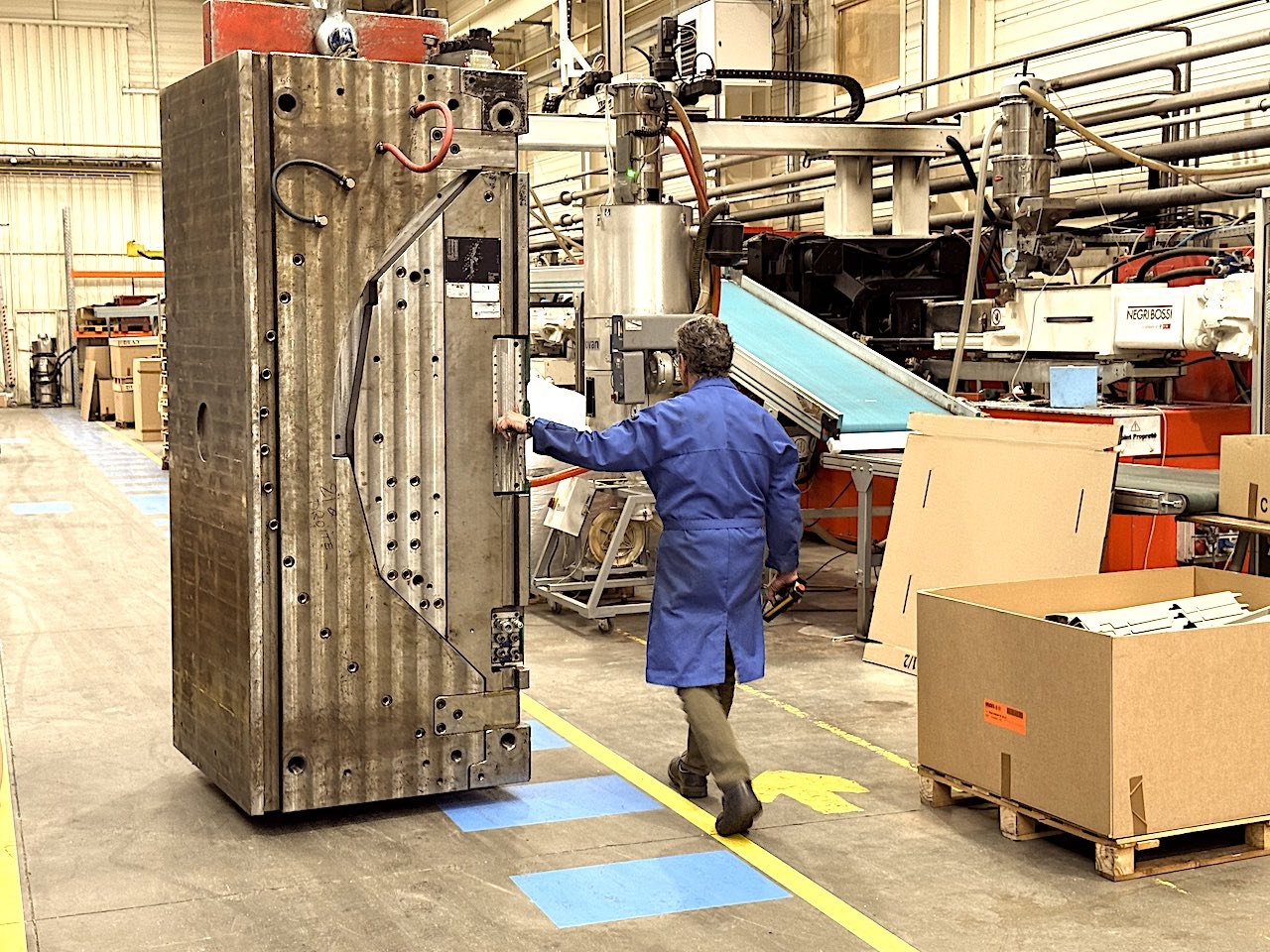
It is a question of thinking of the mold not only as a production tool, but as equipment that will be dismantled, inspected, cleaned, and repaired, sometimes hundreds of times during its lifetime.
The accessibility of technical areas, the logic of disassembly, the modularity of inserts, the management of thermal circuits, and the careful choice of wear materials directly influence the speed and quality of future interventions. A mold designed to be easily opened and maintained reduces intervention times during maintenance operations by 30 to 50%, while limiting prolonged downtime.
For the customer, these choices translate into a measurable improvement in equipment availability, a reduction in corrective maintenance costs of between 30 and 60%, and a service life increased by a factor of 1.5 to 3, depending on the application. Design thus becomes the first step in long-term industrial performance.
A shared interest, from sponsor to injector
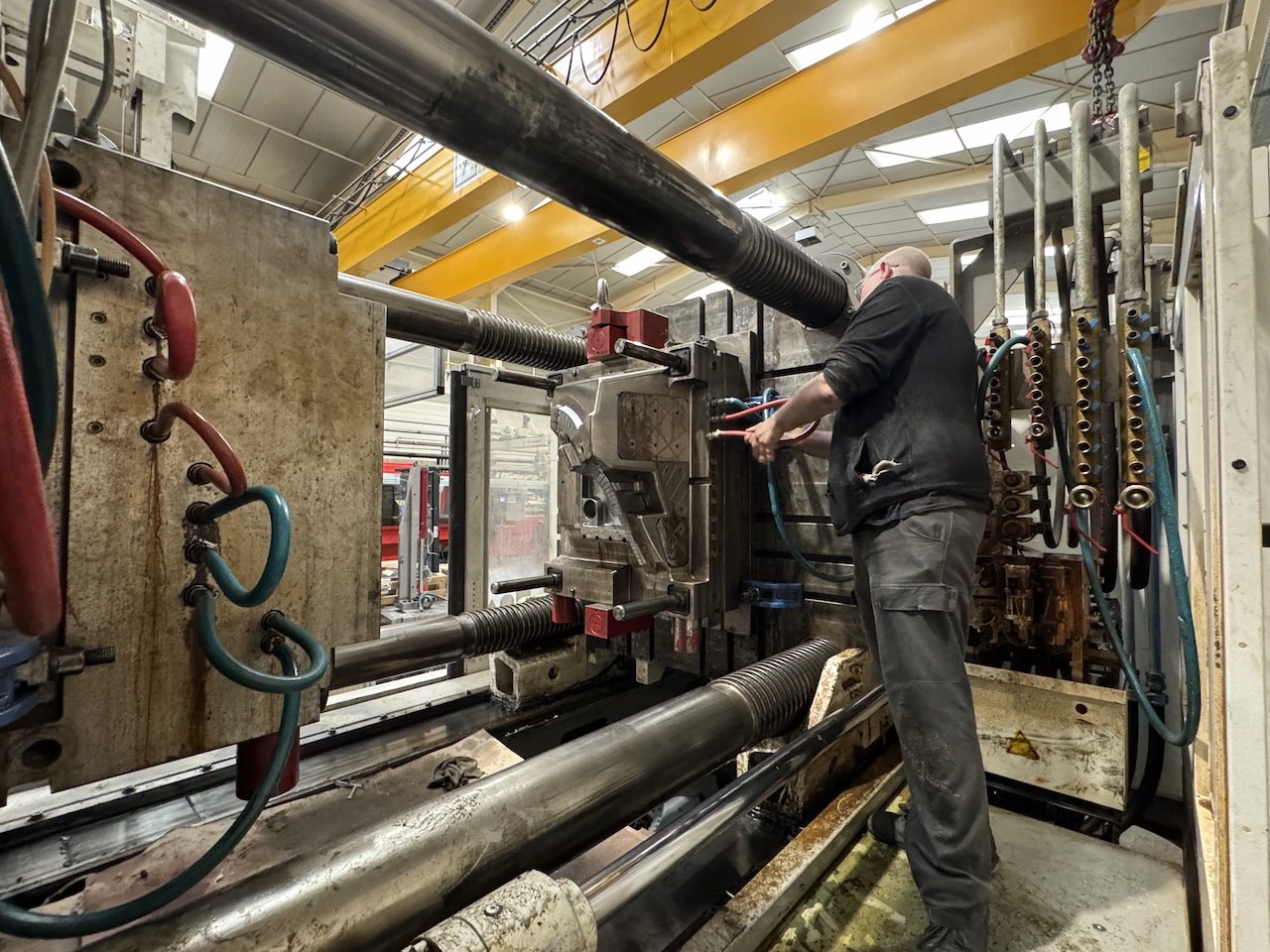
Once production has started, the maintenance strategy is the real nerve center of the injection workshop team atEDELTAMP. It is based on a balance between preventive and corrective maintenance, with the dual objective of ensuring the quality of parts and preserving the service life of equipment.
Preventive maintenance, based on regular checks, cleaning, lubrication, and inspection of mold surfaces, ejectors, and water circuits, makes it possible to anticipate problems before they turn into breakdowns.
On an industrial scale, these differences translate into a major difference in profitability and reliability.
Predicting for better production: maintenance in the service of quality
Quality must be the result of a mindset focused on excellence. Maintenance is now entering a new era: the era of prediction. Thanks to the analysis of production data, careful observation of the condition of injected parts, and the use of weak signals such as scratches, burns, filling defects, and thermal variations, predictive maintenance allows intervention at the optimal moment, neither too early nor too late.
This approach profoundly transforms the relationship to industrial risk at EDELTAMP. It is no longer a question of repairing after a breakdown, or even preventing breakdowns according to a fixed schedule, but of adjusting intervention as closely as possible to actual wear and tear. The gains are significant: a drastic reduction in production stoppages, an additional extension of the service life of molds, continuous improvement in quality, and optimization of machine availability rates.
Economically speaking, predictive maintenance helps avoid costly and unpredictable failures, while stabilizing performance in an increasingly demanding production environment.
Maintenance and environmental issues: a shared commitment
Protecting the environment and people's well-being must be a priority at EDELTAMP. Beyond technical and economic gains, maintenance is therefore a major environmental issue.
By extending the service life of molds, it limits the consumption of raw materials needed to manufacture new tools. By reducing scrap, it decreases plastic waste, unnecessary energy consumption, and the carbon footprint associated with non-compliant parts.
A well-maintained mold produces more consistently, with fewer quality deviations, fewer purges, fewer rejected parts, and therefore less industrial waste.
Maintenance thus becomes a discreet but powerful lever for environmental performance, at the heart of a plastics processing industry that needs to combine competitiveness and responsibility.
A partnership commitment
In this context, injection mold maintenance clearly appears to be a win-win situation for EDELTAMP.
For the customer, it guarantees quality, consistency, cost control, and security of supply. It offers a decisive competitive advantage, improves overall productivity, and strengthens the relationship of trust between the client and the injector.
At EDELTAMP, this vision is part of a comprehensive approach to industrial performance, where mold design, manufacturing, and maintenance are not three separate steps, but inseparable links in the same chain of reliability, durability, and industrial excellence.
Other articles in this category
Keep up to date with EDELTAMP and how we're shaping the future of the plastics industry .