Resistance Through Geometry: When Form Design Becomes a True Driver of Performance
Did you know that a well-designed part can be stronger, lighter, and less expensive than a part that’s simply made thicker? Discover how geometry—through shape design, long before the choice of material—is the first and most powerful driver of performance in thermoplastic injection molding.
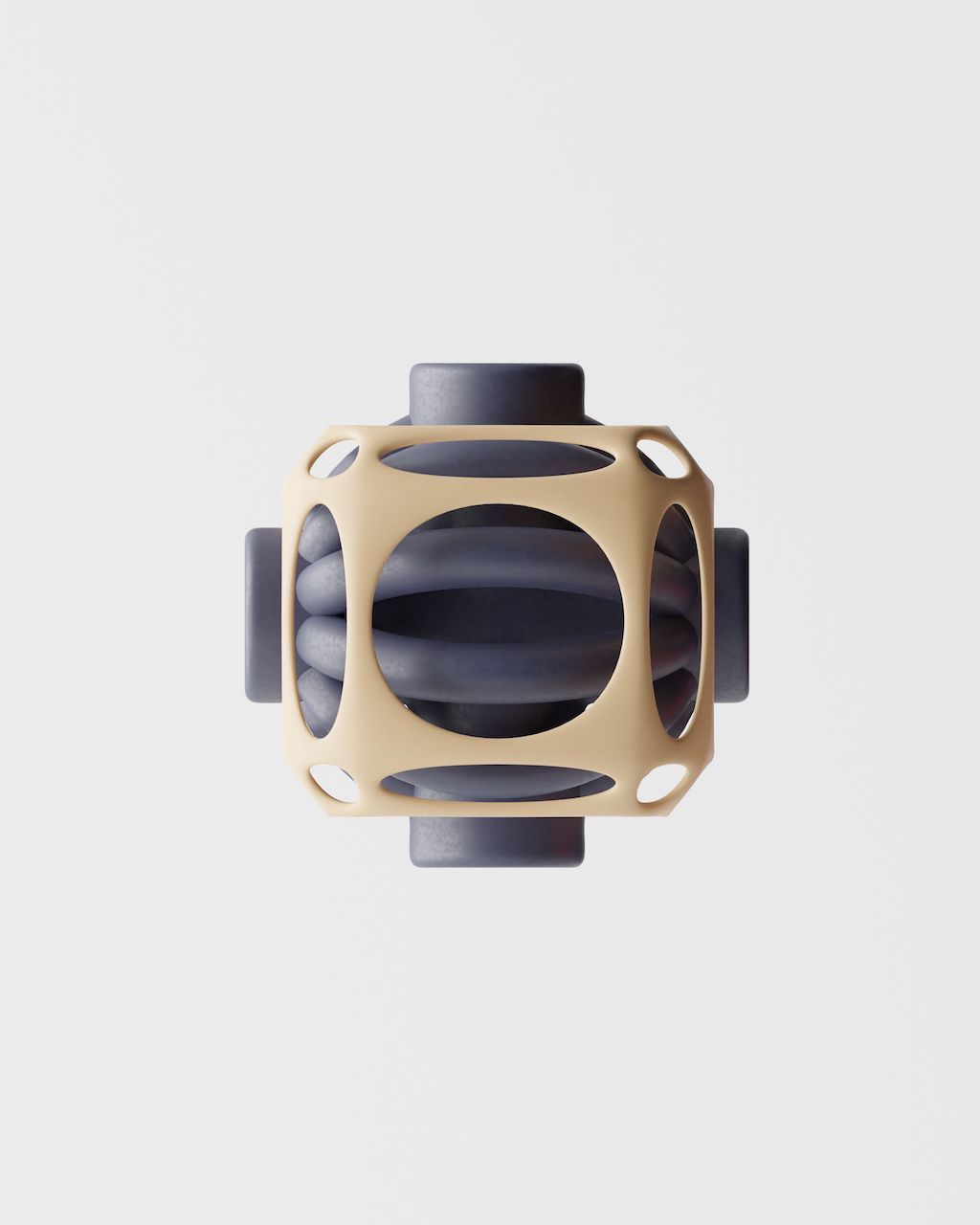
In the world of thermoplastic injection molding, there is a widely held belief among experienced engineers: a well-designed part is better than a part that is simply massive.
In practice, however, there is still a strong temptation to increase the wall thickness or choose a higher-performance material as soon as a strength issue arises. This approach, which is often intuitive, overlooks a much more powerful and far less costly solution: geometry.
Understanding the Process to Improve Design
Thermoplastic injection molding is a cyclic process used to shape parts made of amorphous or semicrystalline polymers, whether reinforced or not. It involves injecting the polymer in its molten state into a temperature-controlled mold cavity, where the material solidifies while taking on its final shape.
Minimizing cooling time is a key step in ensuring the process's cost-effectiveness, but the thermal history during cooling directly affects the quality of the part and must be strictly controlled.
That is precisely where the engineering department atEDELTAMPcomes into play. Thanks to its comprehensive project management —from geometric design through production oversight—the teams anticipate the thermal, rheological, and mechanical constraints specific to each polymer as early as the design phase, in order to design parts that perform well under real-world injection molding conditions.
Design, the first manufacturing process
Even before the mold is machined, the most important decisions have already been made. The chosen geometry determines not only the mechanical strength, but also the injection molding performance, cycle time, scrap rate, and service life.
"It is estimated that 80% of the cost of an injection-molded part is determined during the design phase.”
It’s not the injection molding machine that makes a good part—it’s a good design.Product designis the first and most fundamental of all manufacturing processes. Investing time and attention to detail in the design phase saves on materials, energy, and quality disputes.
It is this philosophy that guides the engineering department atEDELTAMP : treating form design as an engineering decision in its own right, not as a mere formality prior to manufacturing.
Form and Strength: A Fundamental Relationship
In the mechanics of plastics, shape is often more critical than the amount of material. A U- or I-shaped profile resists bending much better than a solid block of the same mass; this is the principle of section modulus. The same logic applies to injection-molded thermoplastics, with additional constraints related to the behavior of the polymer in its molten state and during cooling.
Here are the eight key principles applied by the engineers atEDELTAMP.
1. Choose rounded shapes
Sharp corners create stress concentrations that can lead to cracks, even under low loads. Replacing them with fillets redistributes the stresses over a larger area and significantly improves resistance to fatigue and impact.
2. Maintain a uniform wall thickness
Variations in wall thickness create thermal gradients during cooling, which can lead to shrinkage, warping, and residual stresses. A uniform wall thickness ensures even filling, uniform cooling, and a dimensionally stable part.
3. Use ribs instead of thickening the walls
This is one of the most powerful principles of form design. Doubling the thickness doubles the mass without proportionally improving stiffness, at the cost of sink marks and a longer cycle time. Properly sized ribsprovide comparable stiffness using only a fraction of the material.
4. Share the workload
Anchorage, fastening, or contact areas must be locally reinforced and gradually connected to the rest of the structure using fillets or connecting ribs. This distribution of forces prevents premature failure and improves service life.
5. Choose a closed shape
A closed cross-section (tube, hollow profile, box section) offers torsional stiffness that is incomparable to that of an open cross-section of the same mass. A tubular profile can be ten to one hundred times stiffer than a U-shaped profile with the same perimeter. Closing the geometry—when the function allows it—is a structural decision with a significant impact.
6. Limit stress concentrations
Holes without reinforcement, abrupt changes in cross-section, poorly integrated inserts: every geometric discontinuity is a potential failure point. Fillet radii, reinforcement sleeves, and gradual transitions effectively smooth out stress peaks.
7. Align the reinforcements with the direction of the forces
Filled thermoplastics (glass fiber, carbon fiber) are anisotropic: their properties depend on the orientation of the fibers, which is in turn determined by the flow of material during injection molding. By positioning the gate locations and optimizing the geometry to align the fibers in the direction of the principal stresses, one can fully exploit the potential of the reinforced material.
8. Avoid large, flat surfaces
Due to their inherent mechanical weakness, large flat surfaces flex easily and become deformed when removed from the mold. Breaking them up with cross ribs, curves, or steps improves rigidity, dimensional stability, and surface quality.
Geometry Through Form Design as a Competitive Advantage
In plastics engineering, shape is often more important than the amount of material. A well-designed part—with appropriate radii, optimized ribs, uniform wall thickness, and geometry oriented in the direction of the forces—may be stronger, lighter, and less expensive than a part that is simply made thicker or manufactured from a more expensive material.
That is why the engineers atEDELTAMP placeform designandstrength through geometryat the heart of every project.
Thanks to its design office and its end-to-end project management capabilities, EDELTAMP designs parts that deliver on their promises right from the start—both in production and in service.
The shape thus becomes a key driver of performance, just like the choice of polymer or the injection parameters—and is often much more cost-effective than either of those.
Other articles in this category
Keep up to date with EDELTAMP and how we're shaping the future of the plastics industry .